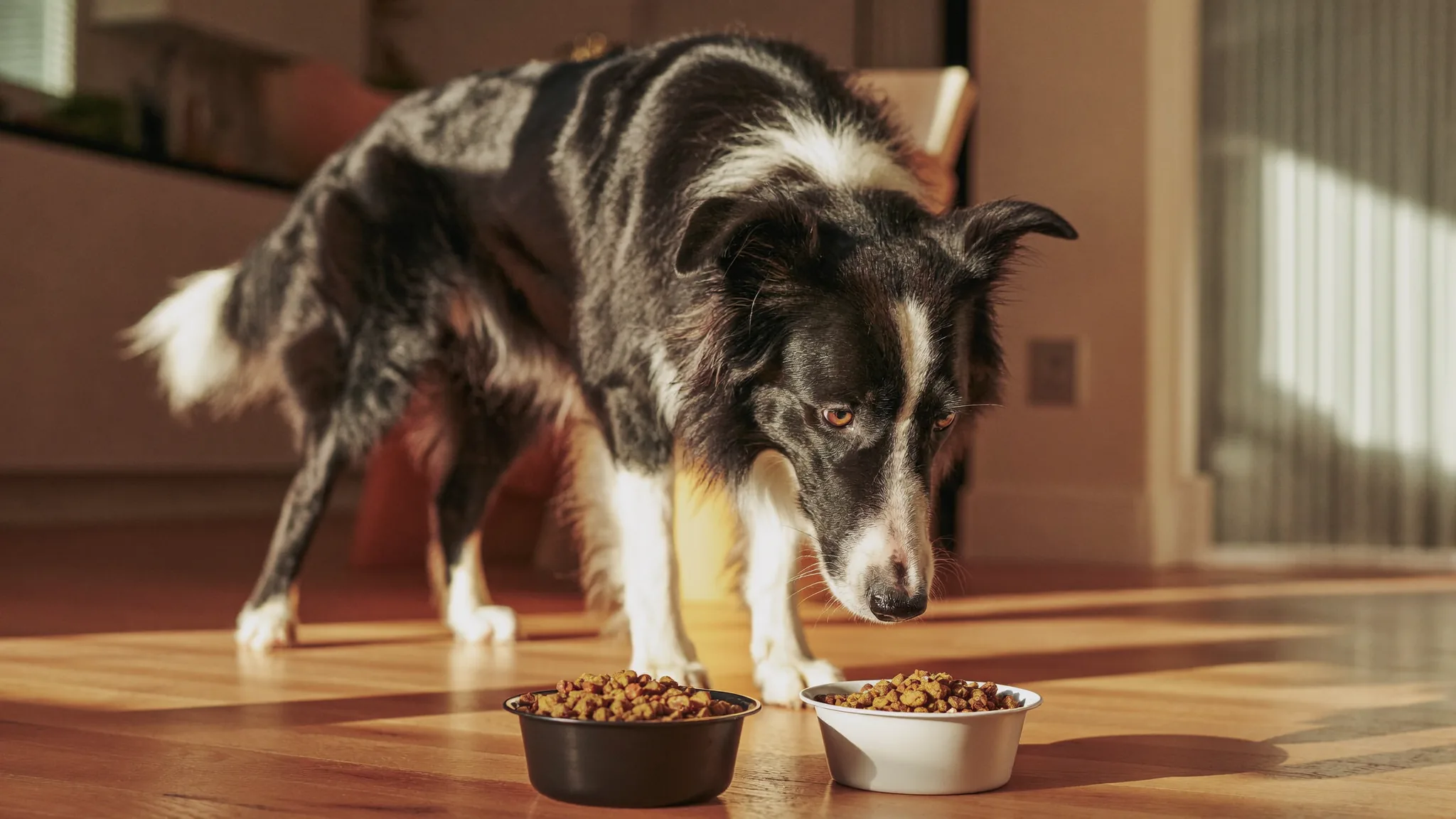

Your dog scratches at his belly after meals. Or his stools have been too soft for weeks, no matter what you try. Or that shine in his coat simply isn't there anymore. You've read plenty about grain-free dog food, but whether it would actually make a difference for your dog, whether it's safe, that part stays unclear.
That uncertainty is understandable. Grain-free is one of the most debated topics in dog nutrition, and the information runs from enthusiastic claims to unsettling warnings about heart disease. This article explains precisely when grain-free makes sense, when it doesn't, and why the carbohydrate source you choose is what really matters.
What is grain-free dog food?
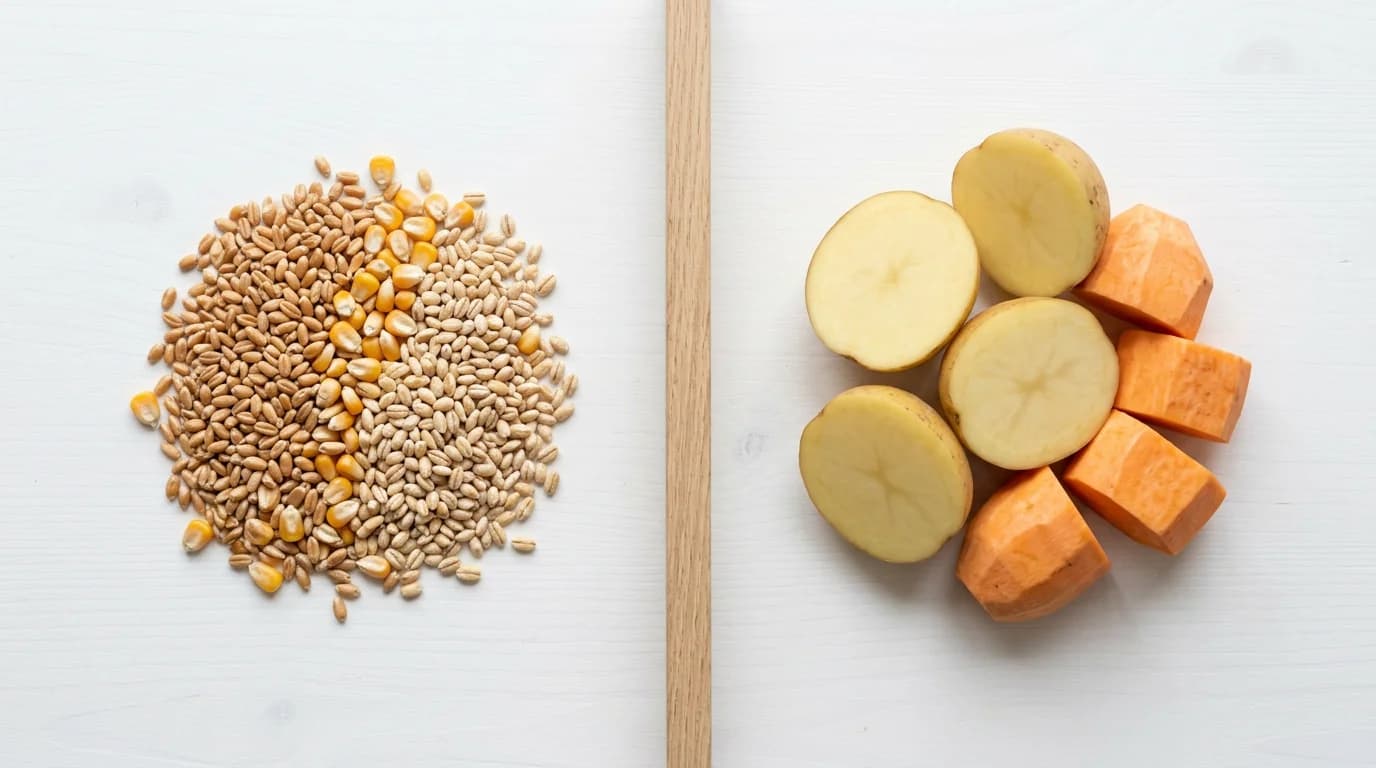
Grain-free dog food contains no wheat, maize, barley, rye, or rice, the grains used in most standard dry dog foods as a cheap, bulking carbohydrate source.
Instead of grains, alternative carbohydrate sources are used: potato, sweet potato, peas, or lentils. Because grains are no longer used as a filler, grain-free recipes typically contain a higher proportion of meat or fish; that's the second distinguishing characteristic.
Grain-free is not the same as hypoallergenic. Hypoallergenic food focuses on the protein source: it avoids known allergens like chicken or beef and uses a protein the dog's immune system doesn't recognise. Grain-free food focuses on the carbohydrate source and removes grains, regardless of which meat it contains. A dog with a chicken allergy gets nothing from grain-free food that still contains chicken. But a dog that reacts poorly to grains and tolerates chicken well is perfectly served by a grain-free chicken recipe. The concepts sometimes overlap, but they are not interchangeable. The knowledge bank entry on grain-free versus grain-inclusive food lays out the nutritional differences without marketing claims.
If your dog reacts to a specific protein such as chicken or beef, grain-free food only makes sense if it also avoids that protein source. If you suspect a protein sensitivity, read more in our article on hypoallergenic dog food.
When does your dog benefit from grain-free food?
Not every dog benefits from grain-free food. For most healthy dogs without complaints it adds nothing medically; a good food with grains is then at least as suitable. [8][9][10]
Grain sensitivity or digestive problems
Some dogs don't digest certain grains well. Not as an immune reaction, but as a digestive issue: the gut flora reacts to the fibres or proteins in wheat or maize. Soft stools, intermittent diarrhoea, excessive wind, or a bloated belly after meals are the most common signs. Once other causes have been ruled out, a grain-free recipe is the logical first step.
Active and sporting dogs
A dog that gets plenty of exercise benefits from food with enough bioavailable proteins and fats to support muscle recovery and endurance. Grain-free food with a high meat content can fit that need well, but switching to grain-free alone does not guarantee better performance. Adjust the portion to activity level, weight, and condition, and consult your vet if in doubt.
Skin problems or a dull coat
Grain-free recipes based on salmon contain naturally high concentrations of EPA and DHA, the omega-3 fatty acids that demonstrably support the skin barrier and improve coat quality in dogs with dry or rough skin. This effect is dose-dependent: it takes 4 to 8 weeks of consistent feeding before it becomes visible.
Why the carbohydrate source matters
Grain-free dog food is not a uniform category, and that distinction is important.
Most discussions about grain-free food and heart problems (DCM, dilated cardiomyopathy) concern recipes with a high proportion of legumes such as peas and lentils. The US FDA has been investigating a suspected link since 2018 but has not demonstrated a causal relationship; the research is ongoing and attention has shifted from “grain-free” to the share of legumes in a recipe, regardless of whether grains are present. Potato is not a legume. [10]
An 18-month prospective, randomised and double-blind study from 2025 in 60 healthy adult dogs found no clinically relevant differences in cardiac markers between four foods with different carbohydrate profiles. Note: this is one study in healthy dogs, not a blanket clearance for every recipe. [11]
More digestible than wheat or maize. Gentle on gut flora and naturally gluten-free: relevant for dogs with gluten sensitivity.
55–70% meat or fish meal (fresh and dried combined). That higher protein percentage supports muscle mass, recovery, and a healthy weight.
Without grains, the glycaemic index is lower: a more stable blood sugar level, fewer energy spikes, and less strain on the pancreas.
Balloxx grain-free uses potato as the primary carbohydrate source. When comparing dog foods: look not only at whether it's grain-free, but also at which carbohydrate replaces the grain.
Which recipe suits your dog?
The right choice depends on your dog's activity level, sensitivities, and coat condition, not on one universal formula.
What is your dog's situation?
Pick the scenario that fits best, and choose that recipe.
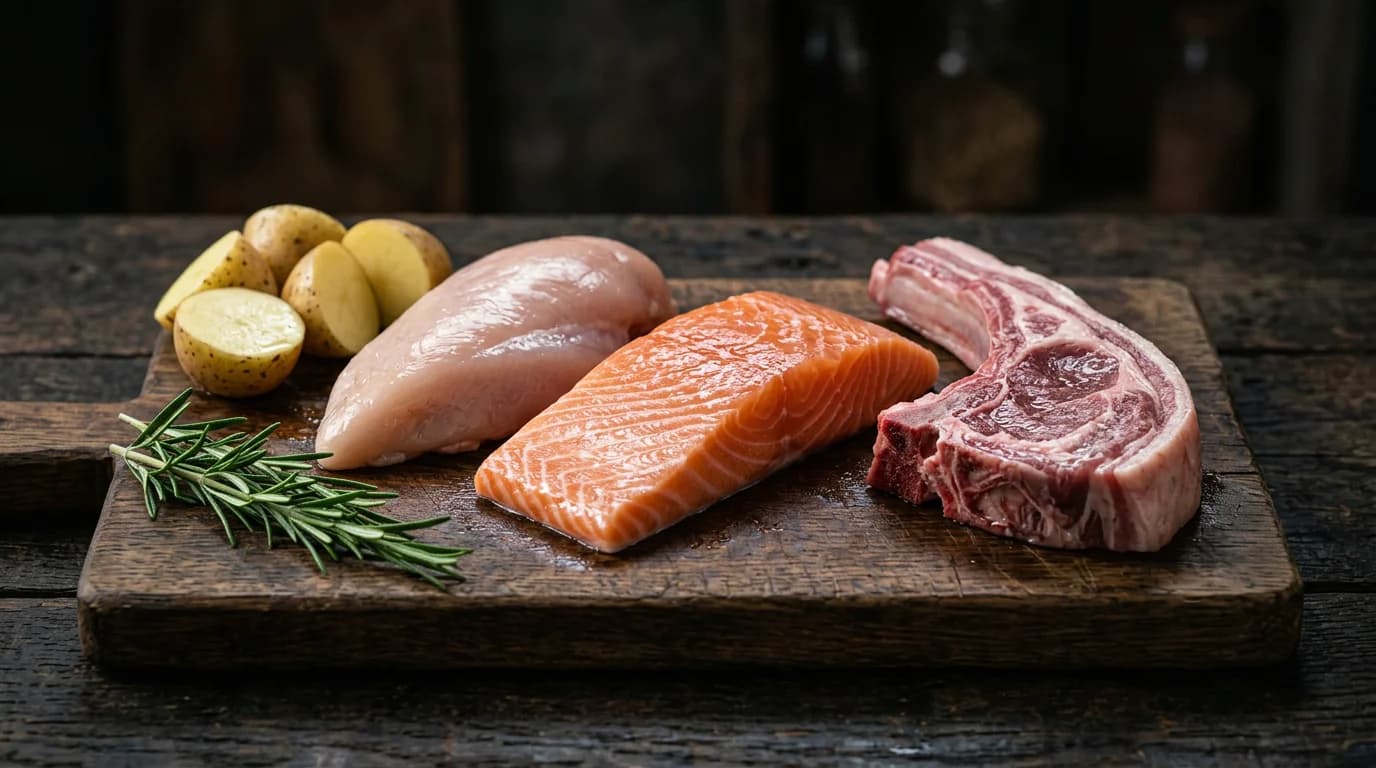
High meat content with potato as the carbohydrate source. Chicken is a complete protein for muscle mass and recovery. The most complete everyday recipe for active dogs without chicken sensitivity.
The highest EPA and DHA in the grain-free range. Supports the skin barrier and improves coat quality. Combined with potato, one of the gentlest recipes for digestion.
Lamb is a less familiar protein source for most dogs. Venison is the most novel of the two: the safest choice when several proteins are already under suspicion.
Browse the full range on the grain-free dog food category page or shop all dog food recipes.
How to switch to grain-free food
An abrupt food change disrupts gut flora and causes temporary digestive issues, even when the new food is objectively better. Always switch gradually over seven days. The 7-day transition in the knowledge bank describes the same step-by-step method.
| Day | Current food | New food |
|---|---|---|
| 1–2 | 75% | 25% |
| 3–4 | 50% | 50% |
| 5–6 | 25% | 75% |
| 7+ | — | 100% |
How quickly you see results depends on what you're trying to improve:
- Digestion: 1–2 weeks. Stools become firmer and more regular, less wind.
- Coat and skin: 4–8 weeks. Shine improves gradually in dogs that respond well to omega-3.
- Energy and condition: several weeks in active dogs.
A gradual dietary transition significantly reduced the incidence of diarrhoea during the test period compared with an abrupt food change, whilst simultaneously supporting the growth of beneficial gut bacteria.
Explore our grain-free range
All recipes on a potato base, no wheat, maize or barley. Browse the full selection.
View grain-free dog foodFrequently asked questions about grain-free dog food
Is grain-free dog food dangerous for my dog's heart?+−
Is grain-free dog food always better than standard food?+−
What is the difference between grain-free and hypoallergenic dog food?+−
Can puppies eat grain-free food?+−
Not sure which recipe fits best? Email support@balloxx.com. We're happy to help.
Sources:
- Carciofi, A.C. et al. (2008): Effects of six carbohydrate sources on dog diet digestibility and post-prandial glucose and insulin response. Journal of Animal Physiology and Animal Nutrition.
- Liao, P. et al. (2023): Abrupt Dietary Change and Gradual Dietary Transition Impact Diarrheal Symptoms, Fecal Fermentation Characteristics, Microbiota, and Metabolic Profile in Healthy Puppies. Animals.
- Adelman, S. et al. (2025): Different carbohydrate sources in dog foods supported overall health and cardiac function: an 18-mo prospective study in healthy adult dogs. Journal of Animal Science.